Selected publications from members of the NONMANUAL project.
Kimmelman, V., Bauer, A., Börstell, C., Bulla, J., Sargano, A. B., Crettenand, L., Figueiredo, L., Kuder, A., Lutzenberger, H., Mihio, D., Oomen, M., & Pfau, R. (2026).
Kinematics of Negative Headshake in Seven Sign Languages. Open Mind, 10, 1636–1677. https://doi.org/10.1162/OPMI.a.394
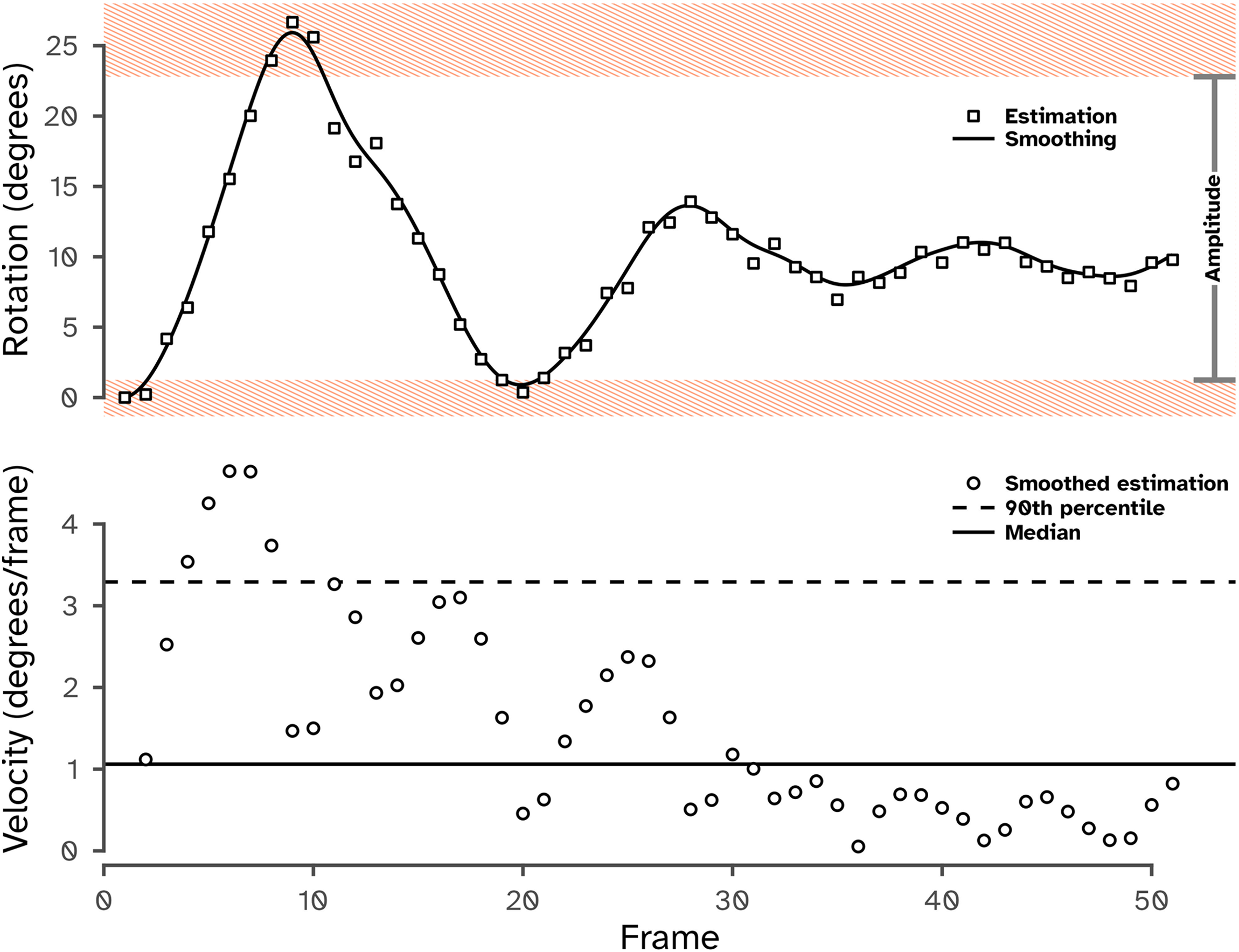
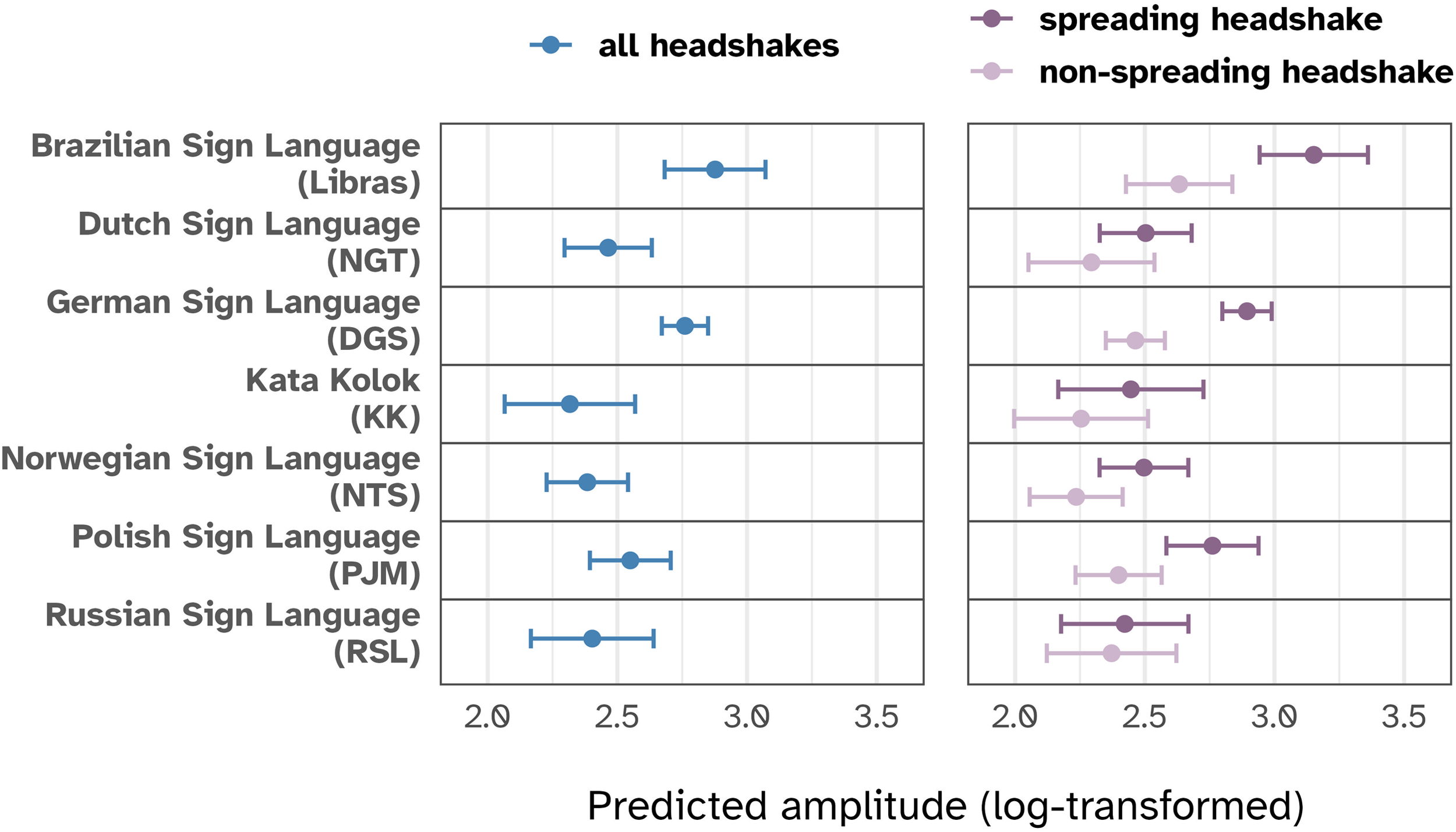
We analyzed kinematics (duration, amplitude and speed) of negative headshakes in seven typologically and
geographically diverse sign languages, using corpus data and computer vision tools. We found that headshake
kinematics varies across languages and functions, and shows different internal dynamics across languages.
This study also showcases a pipeline for using computer vision tools to analyze nonmanual kinematics.
Sargano, A. B., Blasco, C. M., Susman, M., Börstell, C., & Kimmelman, V. (2026).
BlinkFusionNet: Gated multimodal fusion for robust blink event detection in sign language corpora. Computer Vision and Image Understanding, 104978.https://doi.org/10.1016/j.cviu.2026.104978
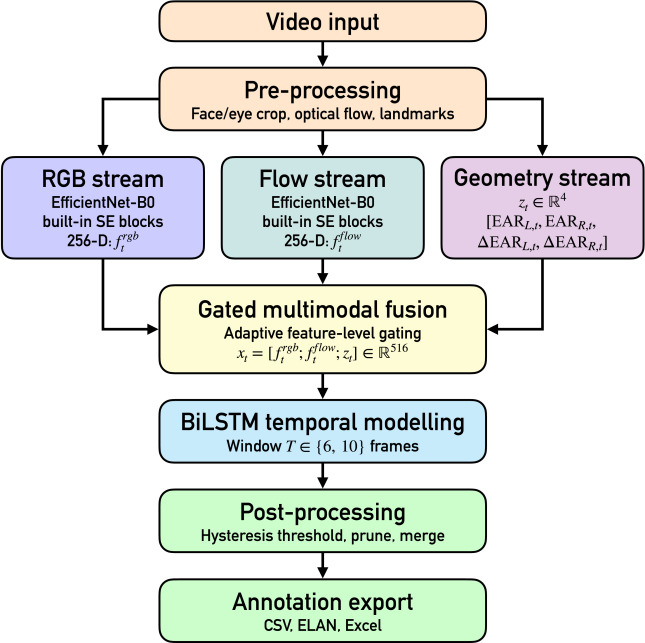
We developed an approach to automatically detect eye blinks in sign language videos. This approach is developed
and tested on videos from sign language corproa, and it works better than existing approaches to blink detection.
The software is freely available for anyone to use.
Bulla, J., & Kimmelman, V. (2026). Processing Kinematics of Nonmanual Markers in R. In E. Efthimiou, S.-E. Fotinea, T. Hanke, J. A. Hochgesang, J. Mesch, & M. Schulder (Eds.), Proceedings of the LREC2026 12th Workshop on the Representation and Processing of Sign Languages: Language in Motion (pp. 61–70). European Language Resources Association (ELRA).. https://www.sign-lang.uni-hamburg.de/lrec/pub/26021.html
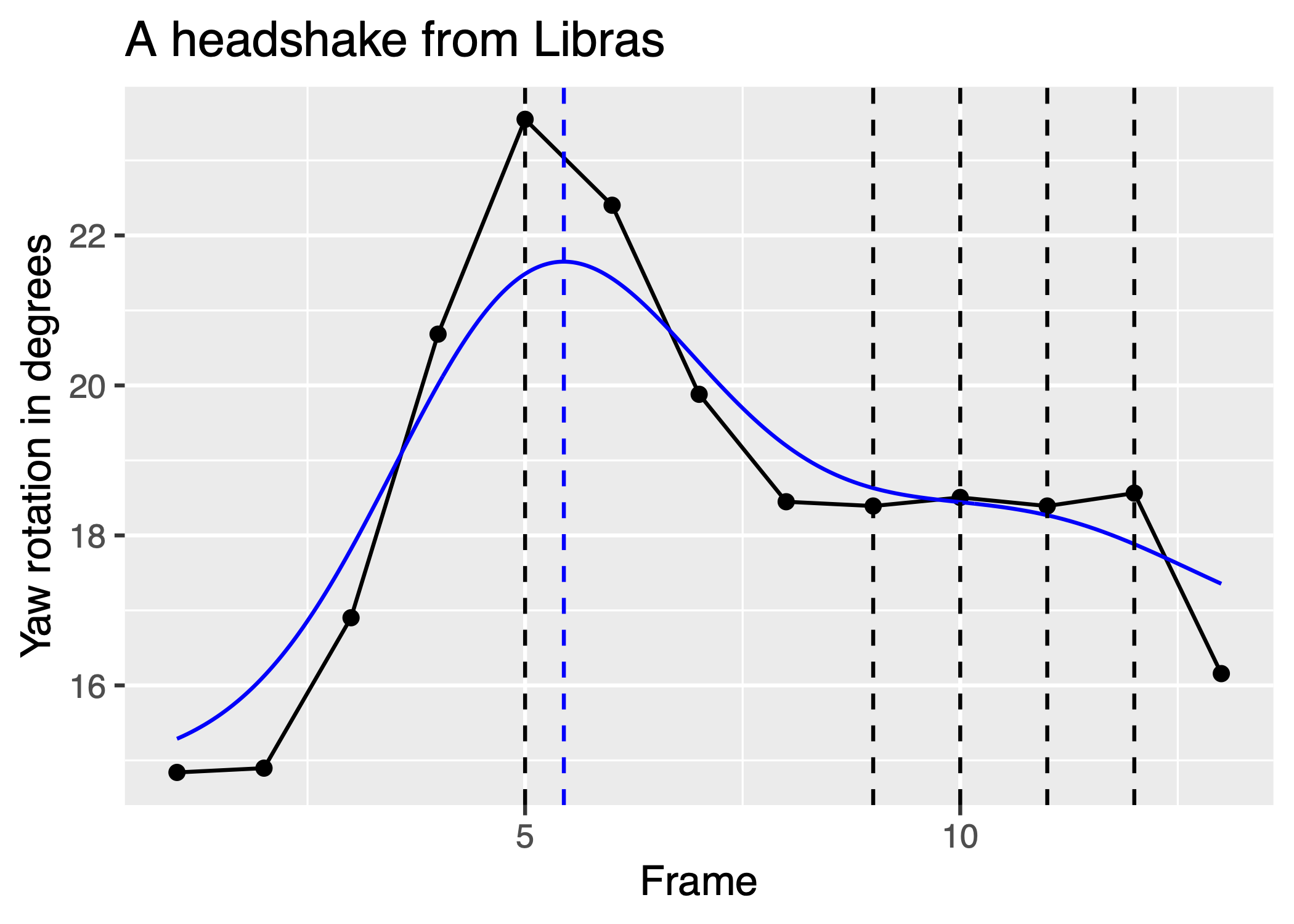
We developed an approach to process computer-vision based measurements of nonmanual markers in R,
including smoothing, peak detection, and calculation of various kinematic measures.
Susman, M., C.M. Blasco, and J. Bulla. (2026). Comparing Computer Vision Instruments for Eye Blink Analysis. In E. Efthimiou, S.-E. Fotinea, T. Hanke, J. A. Hochgesang, J. Mesch, & M. Schulder (Eds.), Proceedings of the LREC2026 12th Workshop on the Representation and Processing of Sign Languages: Language in Motion (pp. 459–467). European Language Resources Association (ELRA). https://aclanthology.org/2026.signlang-1.47/
We compared four tools for analyzing blink velocity and amplitude, examining how MediaPipe, OpenFace,
InsightFace, and 3DDFA compare in terms of blink analysis. We found both similarities and differences between
the instruments. The discrepancies highlight methodological biases that can distort linguistic interpretations.
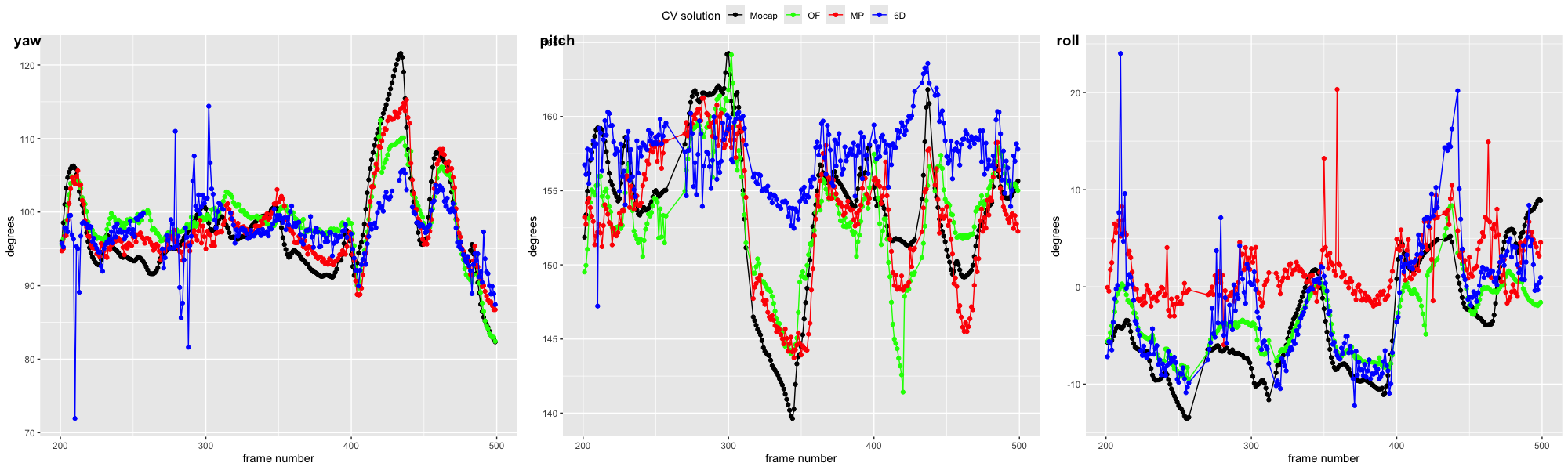
Sargano, A.B., Vandenitte, S. Jantunen, T., & Kimmelman, V. (2024). Evaluation of Head Pose Estimation Algorithms for Sign Language Analysis. 2024 International Conference on IT and Industrial Technologies (ICIT), 1-6. https://doi.org/10.1109/ICIT63607.2024.10859486
We tested three head pose estimation solutions against MoCap data of Finnish Sign Language in order to evaluate their
reliability and precision in head pose estimation. The results are quite good for yaw estimation, but worse for pitch and
roll estimation
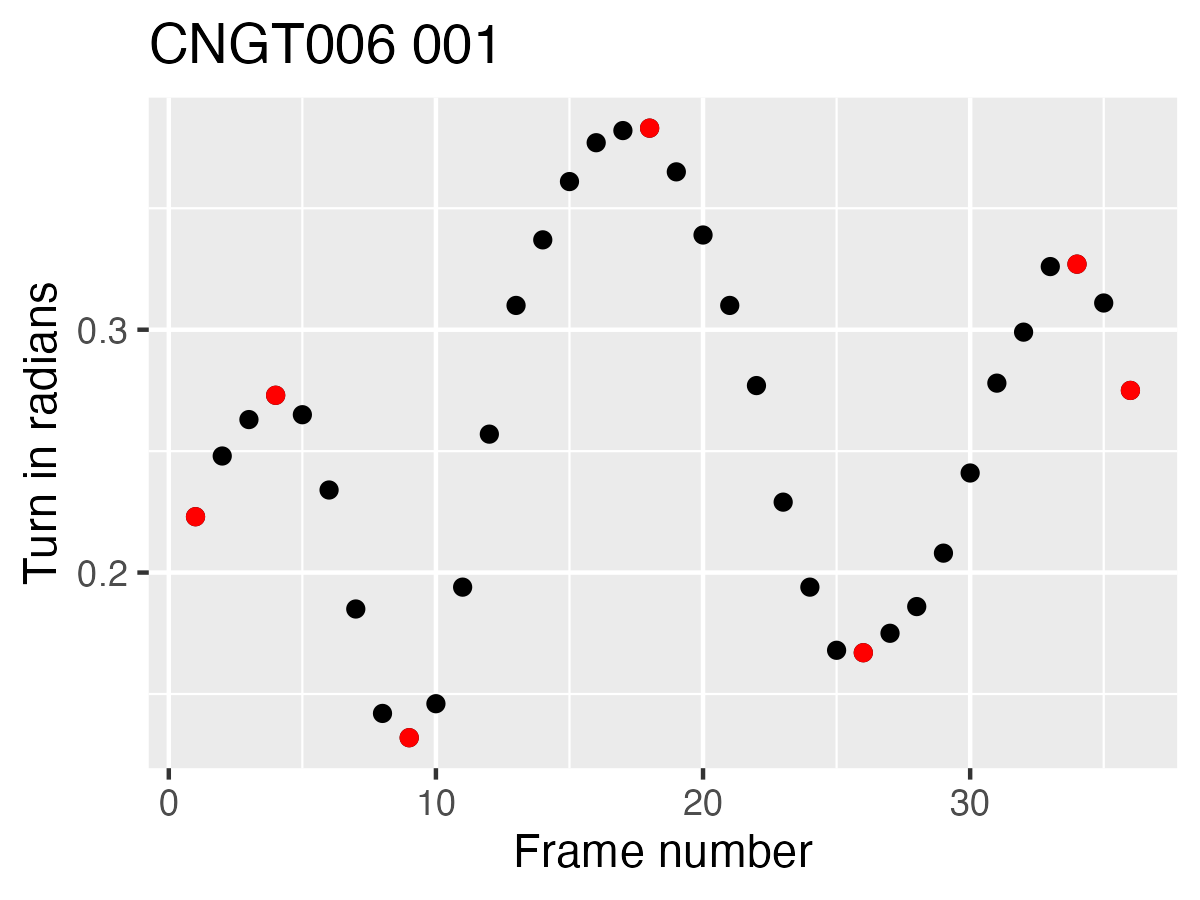
Kimmelman V., M. Oomen & R. Pfau. (2024). Headshakes in NGT: Relation between Phonetic Properties & Linguistic Functions. Proceedings of LREC-SL 2024. https://aclanthology.org/2024.signlang-1.17.pdf
We use OpenFace to measure head rotation during headshakes expressing negation in NGT (Sign Language of the Netherlands).
We find that some of the phonetic/kinetic measures of headshakes correlate with their linguistic functions.
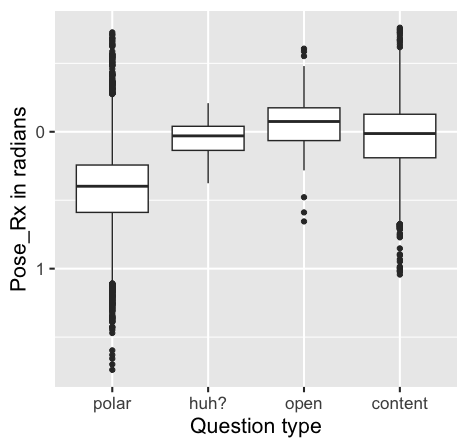
Kimmelman V., A. Price, J. Safar, C. de Vos & J. Bulla. (2024). Nonmanual Marking of Questions in Balinese Homesign Interactions: a Computer-Vision Assisted Analysis. Proceedings of LREC-SL 2024. https://aclanthology.org/2024.signlang-1.18.pdf
We look at nonmanual marking of questions in 5 deaf homesigners from Bali. It turns out that polar questions and non-polar
questions are marked by opposite directions of head movements, and this is consistent across homesigners. The analysis is based
on a combination of manual annotation and extracting measurements of head tilt (pitch) with OpenFace.
Eye blinks are an important prosodic markers across sign languages. However, cross-linguistic research on these markers is
almost non-existent. In order to enable cross-linguistic comparison, we develop and test two methods of automatic detection of eyeblinks.
Both methods produce promising results.
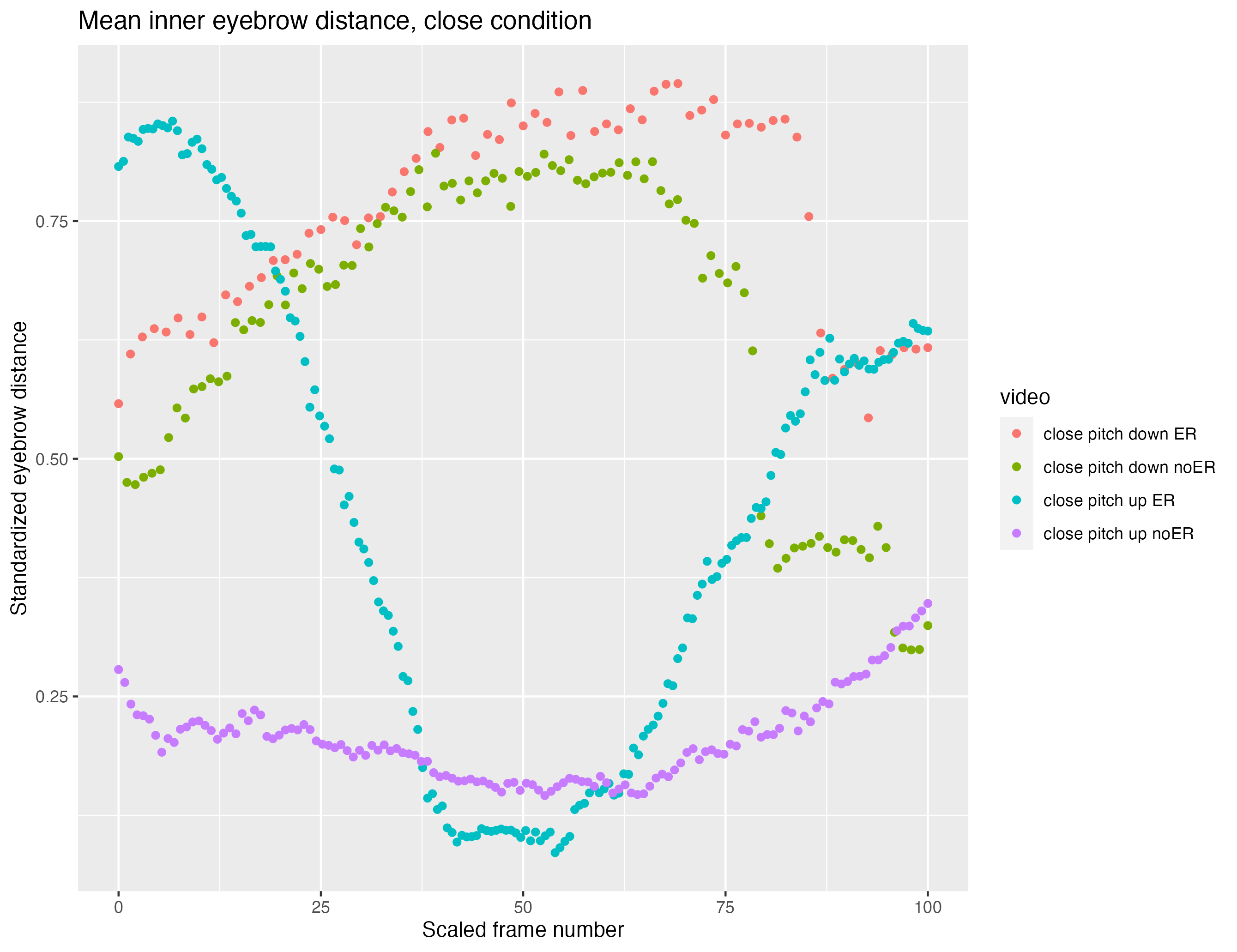
Kuznetsova, A. & V. Kimmelman. (2024). Testing MediaPipe Holistic for Linguistic Analysis of Nonmanual Markers in Sign Languages. arXiv.. http://arxiv.org/abs/2403.10367.
We tested whether MediaPipe 3D reconstructed model of the face is distorted in the presense of head tilts (and compare it to the
OpenFace 3D reconstructed model). It turns out that both models are substantially distorted in the presence of vertical head tilts (pitches),
which makes it impossible to use eyebrow distance measurements from these models without additional corrections.
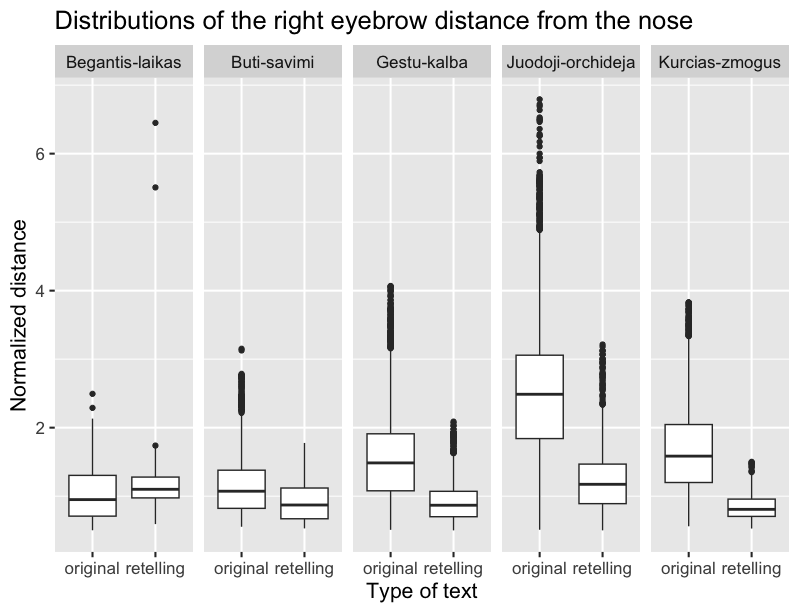
Kimmelman, V. & A. Teresė. (2023). Analyzing Literary Texts in Lithuanian Sign Language with Computer Vision: A Proof of Concept. In R. Galimullin & S. Touileb. CEUR Workshop Proceedings vol.3413.. https://ceur-ws.org/Vol-3431/paper5.pdf
In this study, we demonstrate how Computer Vision (MediaPipe) can be applied to analyze kinetic properties in literary pieces and
their non-literary retellings in Lithuanian Sign Language. For example, the graph below shows that the eyebrows move more in the originals
in comparison to the retellings of the same pieces.